Why Patios Sink and Slabs Rock
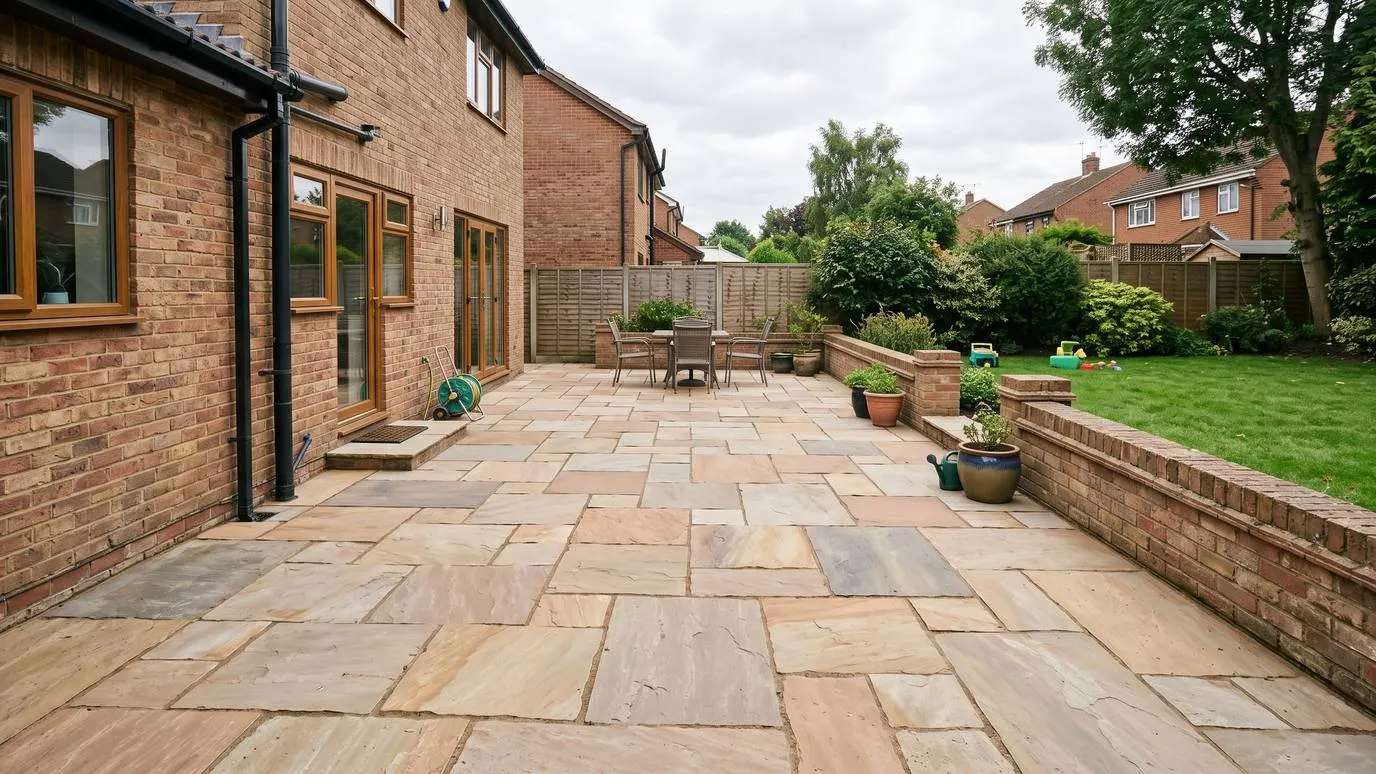
A rocking slab or a dip that holds water is usually a sign of a problem underneath. Finding the cause matters more than re-pointing the joints.
The usual suspects
Patios are built in layers: the natural ground, a compacted sub-base, a bedding layer of mortar and then the slabs. When a patio sinks or slabs start to move, one of those layers has failed. The surface is rarely the cause on its own.
Not enough sub-base
The most common cause of sinking is a thin or missing sub-base. Some patios are laid straight onto soil or a few centimetres of sand. Soil compresses and moves as it gets wet and dries out, and slabs laid on it follow that movement. A proper sub-base of compacted crushed stone spreads the load and gives the bedding layer something firm to sit on.
Poor compaction
Even the right material sinks if it was not compacted properly. Stone has to be compacted in layers. If a deep layer was tipped in and only the top was compacted, the lower part settles over the following months. The same applies to backfilled ground, for example over a recently dug drain trench or where a soakaway or old pond was filled in.
Spot bedding
A slab laid on a few blobs of mortar, one at each corner and one in the middle, is supported in only a handful of places. The rest of the slab sits over empty space. Over time the slab can rock on the high points, and it is more likely to crack under a point load. Water can also collect under the slab and freeze. A full mortar bed supporting the whole underside is the standard method for natural stone and porcelain.
Weak bond
Slabs can work loose if the mortar did not bond to them. Porcelain is a common example, because its smooth, dense back needs a primer slurry before laying. Sandstone also bonds better with a primer. Slabs that sound hollow when tapped have often lost their bond.
Water underneath
A patio without enough fall, or one that drains towards the house, can leave water sitting on or under the surface. Water softens the ground below and can wash fine material out of the sub-base. Leaking downpipes, gullies and drains under or beside a patio have the same effect. If one area keeps sinking, check what is happening to the water nearby.
Roots and trees
Tree and shrub roots can lift slabs as they grow. Removing a large tree can cause the opposite problem, as the roots rot and the ground settles. On clay soils near trees, the ground can also shrink in dry summers and swell again in wet winters.
What can be done
Re-pointing the joints does not fix a slab that is moving. Rocking or sunken slabs need lifting, the bedding and sub-base below checking, and then relaying on a fresh full bed. If only a few slabs are affected, that can often be done locally. Where large areas have dropped, the patio may need taking up and rebuilding with a proper sub-base.
Natural stone varies between batches, so replacement slabs can look different from the originals. Lifting and reusing the existing slabs, where they are not cracked, usually gives a better match.
Ask before it is built
If you are having a new patio laid, ask how deep the excavation will be, what the sub-base is made of, how it will be compacted and whether the slabs will go on a full mortar bed. Those four answers tell you more about how the patio will behave in ten years than the choice of stone does.
Photos and video on this site are illustrative.