Planning Permission for a Front Driveway: The Five Square Metre Rule and Permeable Surfaces
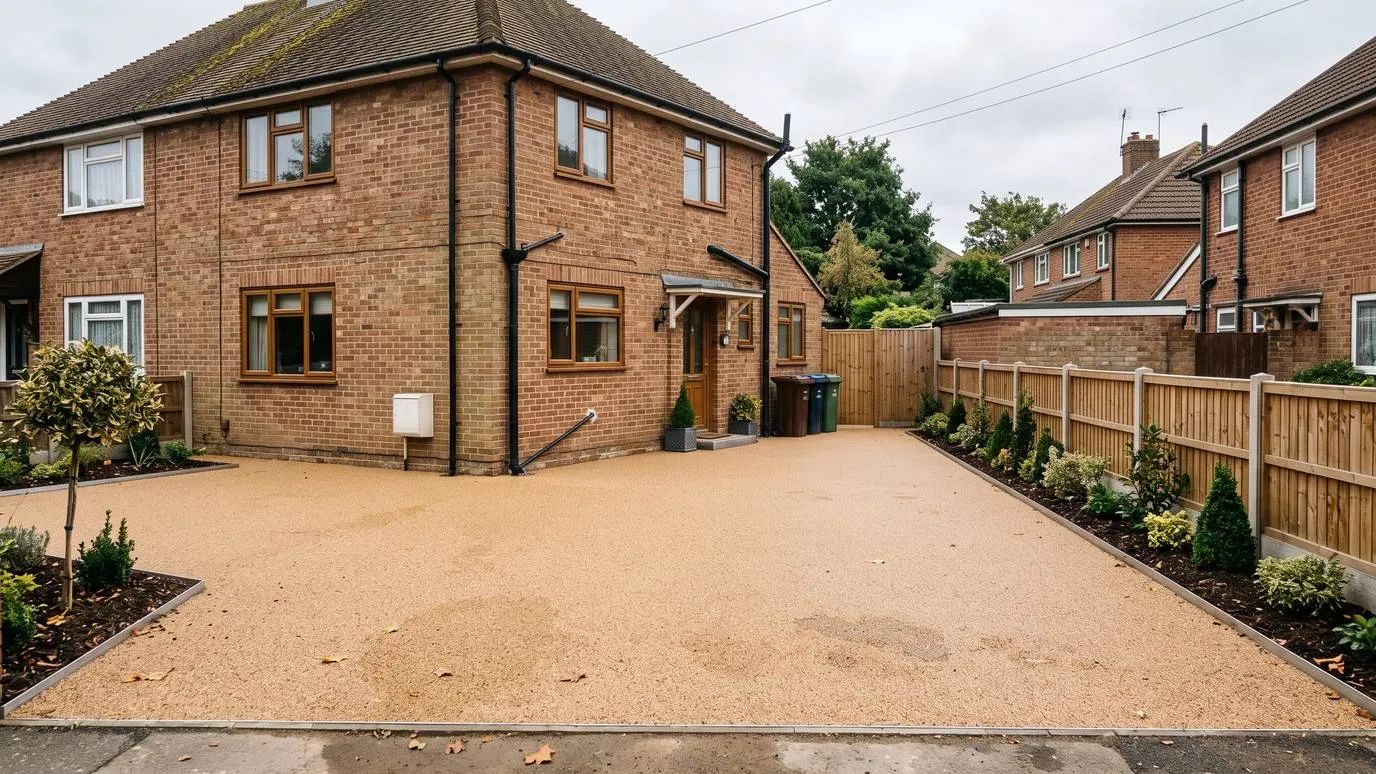
Many front driveways can be built without a planning application, but not all of them. In England the deciding factors are the size of the area and where the rainwater goes.
Why the rule exists
When front gardens across a street are paved over with hard, sealed surfaces, rain that used to soak into the soil runs straight into the drains instead. In heavy storms that extra water adds to surface flooding and can overload sewers. The planning rules for front gardens are aimed at that problem, rather than at how a driveway looks.
The rule in England
In England, householders have permitted development rights that allow some work without applying for planning permission. For front gardens, the position is as follows. If the new or replacement hard surface is five square metres or less, you do not need planning permission for it. If it is more than five square metres, you do not need permission as long as the surface is permeable, or the water from it is directed onto a lawn, flower bed or other permeable area within your property. If it is more than five square metres and made of a traditional impermeable material, with water running off onto the road or pavement, you need to apply.
The rule covers the area between the front of the house and the road. Back gardens are treated differently.
What counts as permeable
A permeable surface lets water pass through it into the ground below. Options include gravel, permeable block paving with gritted joints, resin-bound surfacing on a permeable base, and porous asphalt. The surface alone is not enough. The layers underneath also have to let water through, which usually means an open-graded sub-base rather than a standard compacted one full of fine material. Clay soils that hold water may need extra drainage below.
Ordinary block paving, standard tarmac and concrete are not permeable. They can still be used without permission if the water is channelled into a soakaway or a rain garden on your own land, rather than onto the highway.
When permitted development does not apply
Permitted development rights do not apply to every home. Flats and maisonettes do not have them. Listed buildings need listed building consent for many changes. In conservation areas and some other designated areas, rights may be restricted, and some estates have had rights removed by a planning condition or an Article 4 direction. If any of these could apply, check with the council’s planning department before work starts.
Outside England
The rules described here are for England. Wales, Scotland and Northern Ireland each run their own planning system, and the details for front gardens differ. If you live outside England, check the current guidance with your local planning authority.
Dropped kerbs are separate
Even where the driveway itself needs no planning permission, crossing the pavement to reach it is a separate matter. A dropped kerb needs approval from the council, and in some cases planning permission as well, for example on a classified road.
Practical steps
Measure the area you plan to surface and sketch where the water will go. Ask your installer to explain how the design deals with rainwater and whether it relies on a permeable build-up or a soakaway. If you are not certain, ask the council. Many planning departments will tell you whether permission is needed, and some offer a formal certificate of lawful development if you want written confirmation.
Photos and video on this site are illustrative.