Three other surfaces, each needing a sound base
Resin and tarmac drives, and loose gravel. Each handles rain in its own way, so we go through which one fits your drive and how you use it.
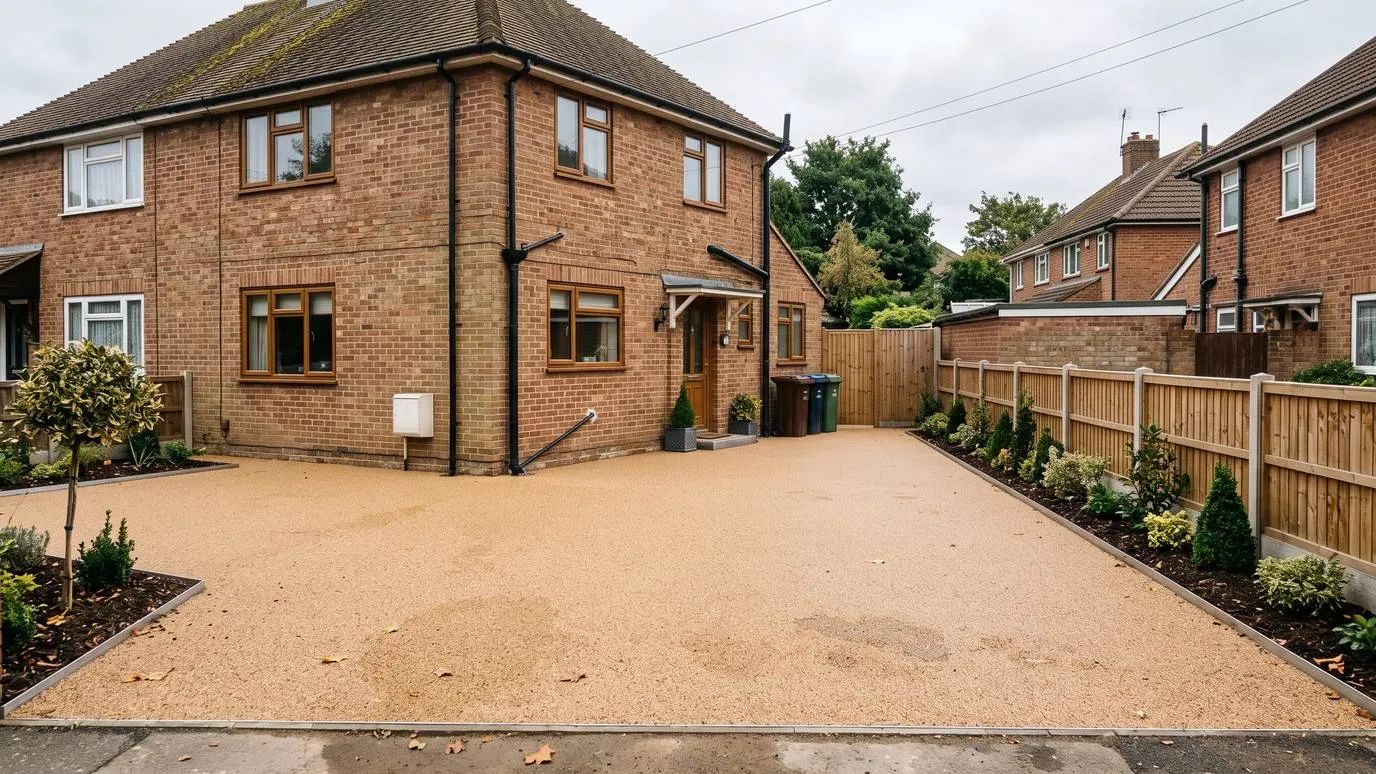
What it covers
- Resin-bound stone trowelled over a suitable base
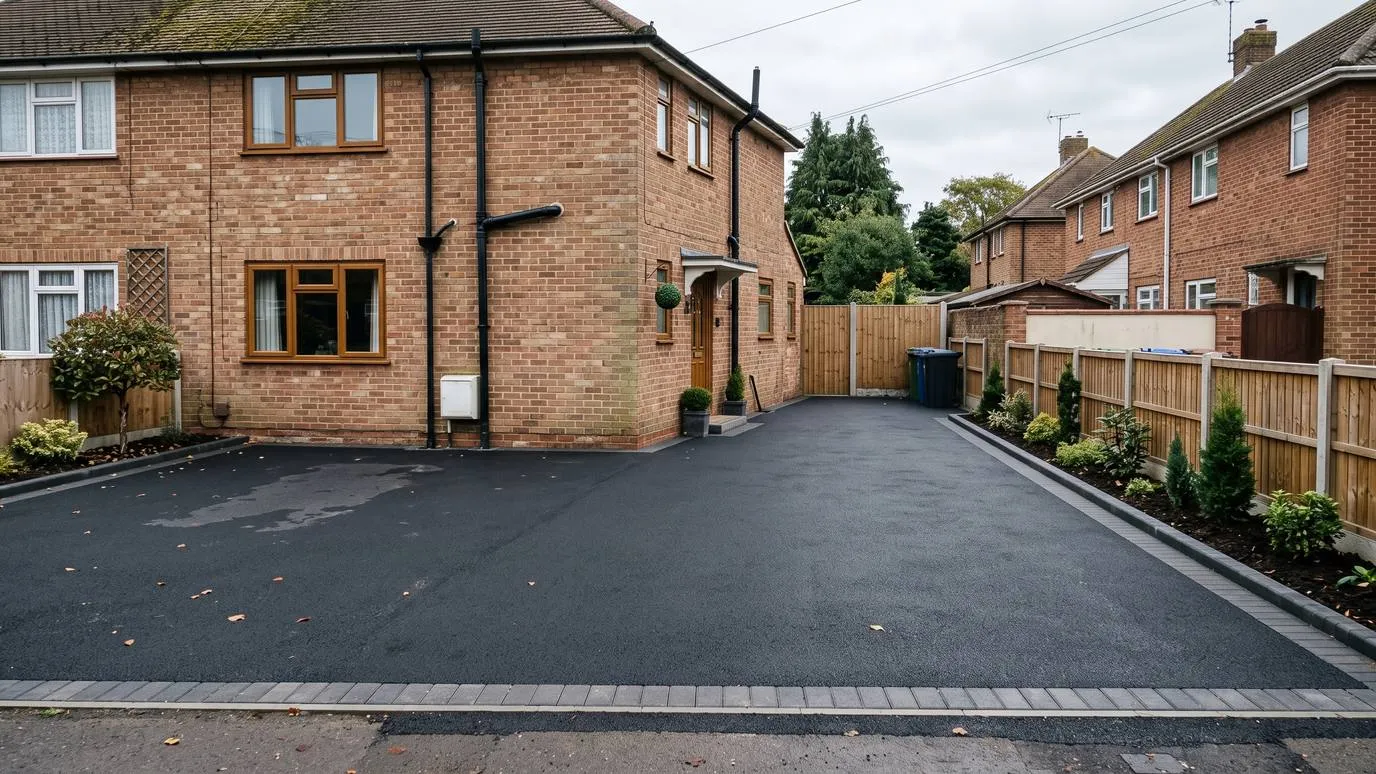
- Tarmac laid hot in two layers and rolled
- Gravel over a compacted base, with a membrane
- Stabilising grids to hold gravel in place
- Kerbs, block borders or metal edging
- Falls and drainage planned for the surface
- Clear advice on when you can drive on it
The detail
These three surfaces look nothing alike, but each one depends on what goes under it. We’ll talk through how you use the drive, how it slopes and how much upkeep you want, then what each surface would mean for your house.
Resin-bound
Small stones are mixed with clear resin and trowelled flat, which gives an even surface with no loose gravel. It’s comfortable underfoot and easy for buggies. A cracked base will show through, and to drain properly the base has to let water through as well. Resin needs dry conditions, so the date can move with the forecast. It’s worth asking whether the resin is UV-stable, because some darken or yellow in sunlight.
Tarmac
A domestic tarmac drive is usually laid hot in two layers: a coarser one for strength and a finer one on top, each rolled while it’s hot. It needs firm edging to stop the sides crumbling, and falls to shed water, because standard tarmac isn’t permeable. It stays soft for some weeks, particularly in warm weather. Try not to turn the wheel while the car is standing still, and vary where you park for a while.
Gravel
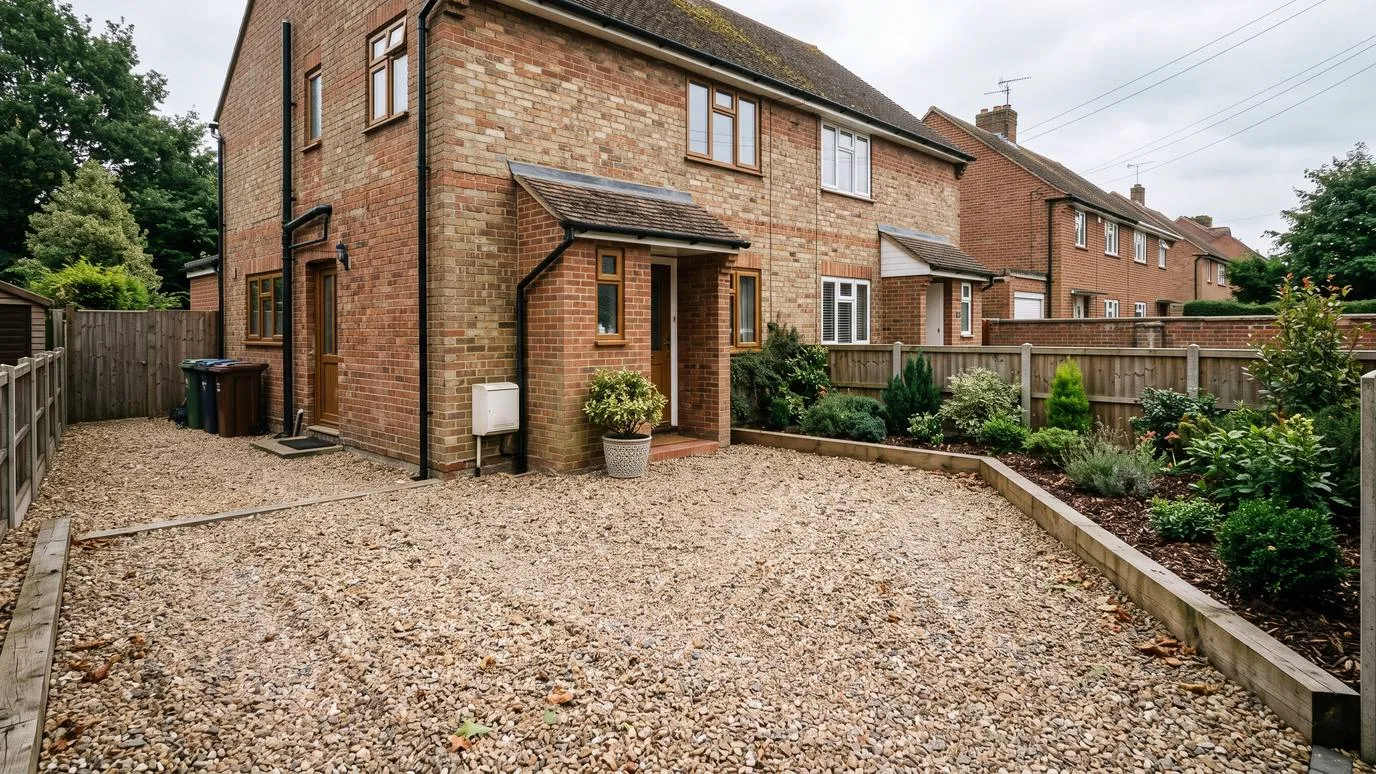
Rain passes straight through gravel, and it’s usually the quickest surface to lay over a prepared base. Loose stone does move, though. It ruts under tyres and spreads onto lawns and pavements, and it’s hard work for wheelchairs and bins. Plastic grids hold the stone in place and make the surface firmer. Some councils want a bound strip next to the pavement to keep stones off it, so check with your council if you’re close to the road.
Step by step
- 01
Choose the surface
We look at your slope and the ground, ask how you use the drive, and go through which surfaces would suit it.
- 02
Prepare the base
The old surface comes up, the ground is dug to firm level and the right base goes down for the surface you chose.
- 03
Edges and drainage
Firm edges go in before the surface, with the falls set so the rain runs away from the house.
- 04
Lay and leave
The surface goes down in suitable weather, and you're told how long to keep off it on foot and by car.
Before and after
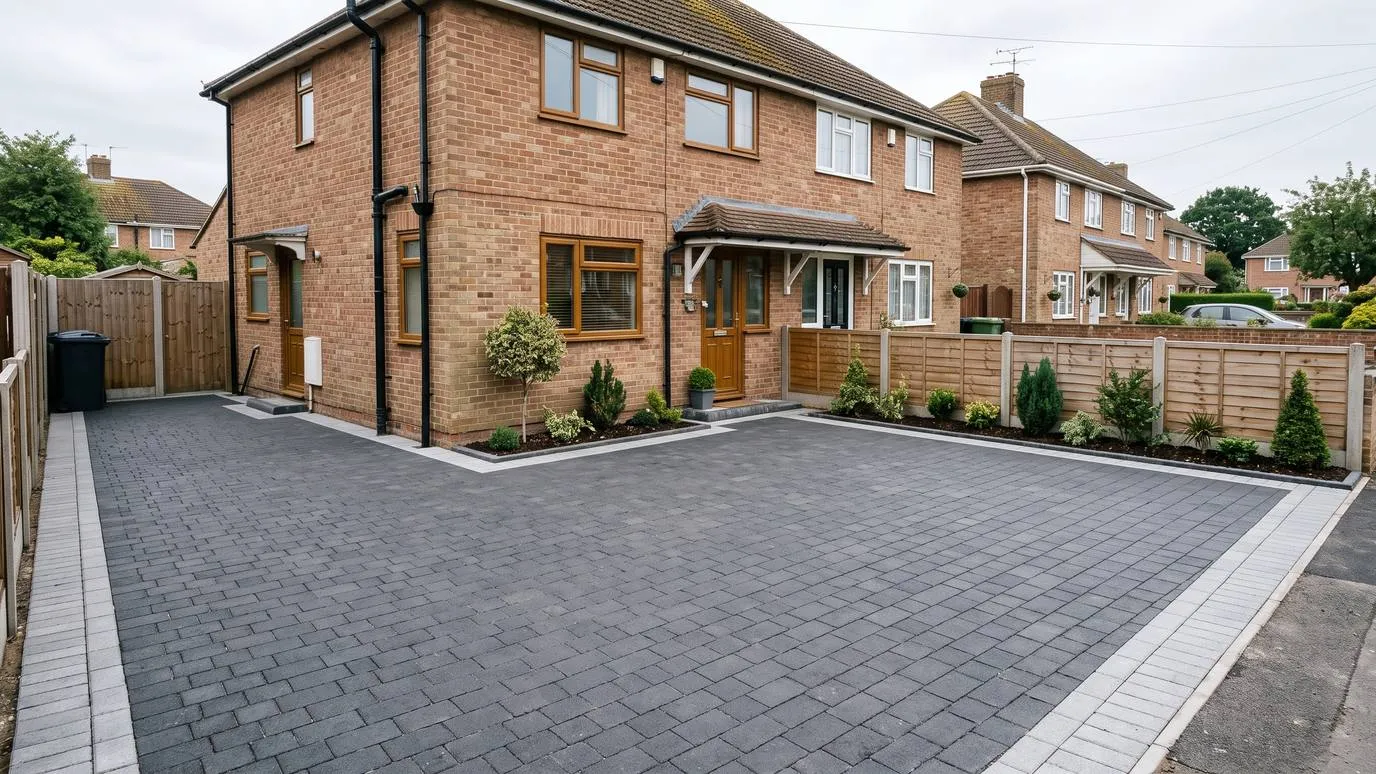
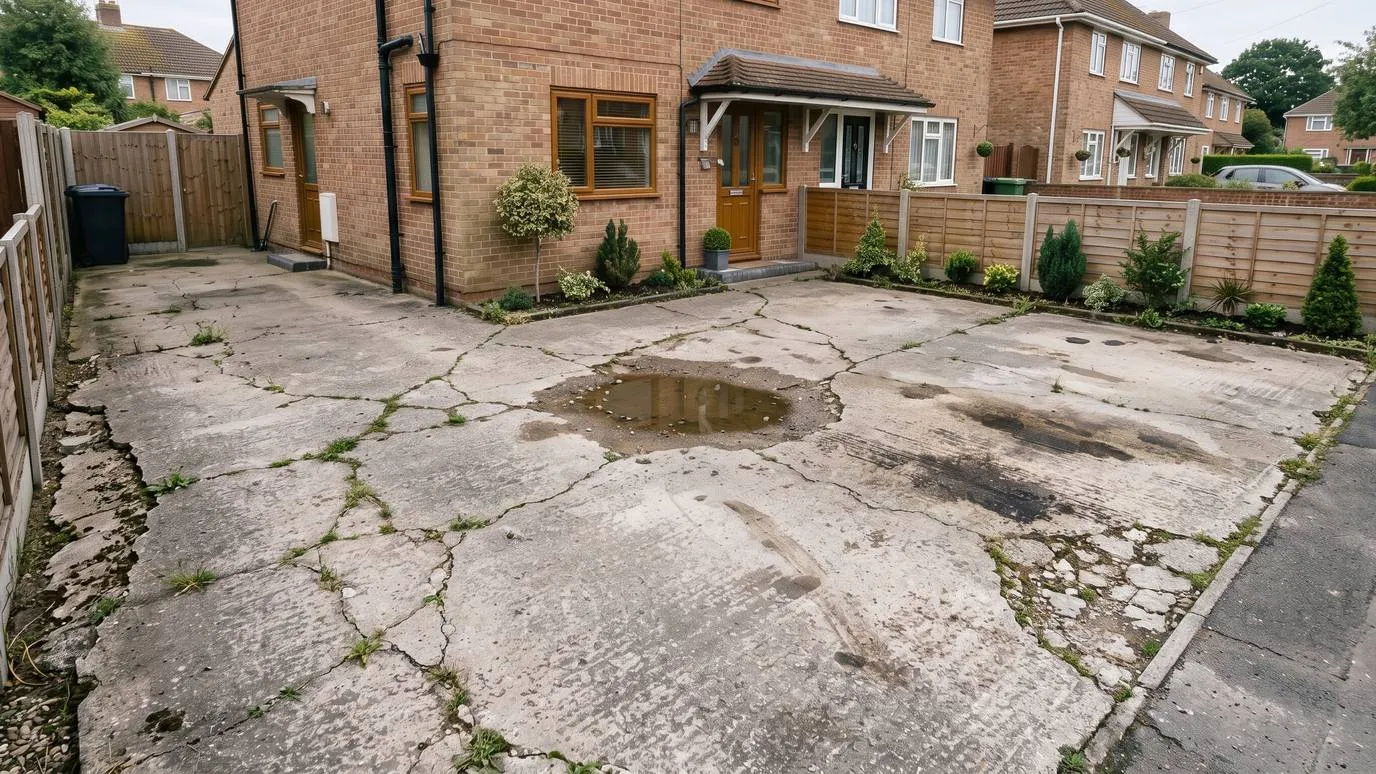
Front drive: cracked concrete to charcoal blocks.
Photos
Questions
What's the difference between resin-bound and resin-bonded?
Resin-bound stone is mixed with the resin and trowelled smooth, and on a permeable base it lets water through. Resin-bonded is loose stone scattered onto a layer of wet resin, which is rougher and doesn't drain. Check which one a quote means.
How soon can I drive on it?
It depends on the surface and the weather. Gravel is ready once spread and levelled, and tarmac is usually firm enough to drive on carefully once cooled. Many installers suggest waiting 24 to 72 hours on resin, and longer in the cold.
Which of these avoids a planning application?
In England, a permeable front garden surface generally doesn't need one, and gravel or resin-bound on a permeable base can qualify. Standard tarmac over five square metres usually needs the water sent to a lawn, border or soakaway on your land. Rules vary, so check with your council.
Can you tarmac straight over my old drive?
It's quicker, and the old cracks and dips soon come through. Tarmac follows whatever is under it, so the sound way is to take up the old surface and build a firm base first.
Other services