Slabs on a full mortar bed, falling away from the house
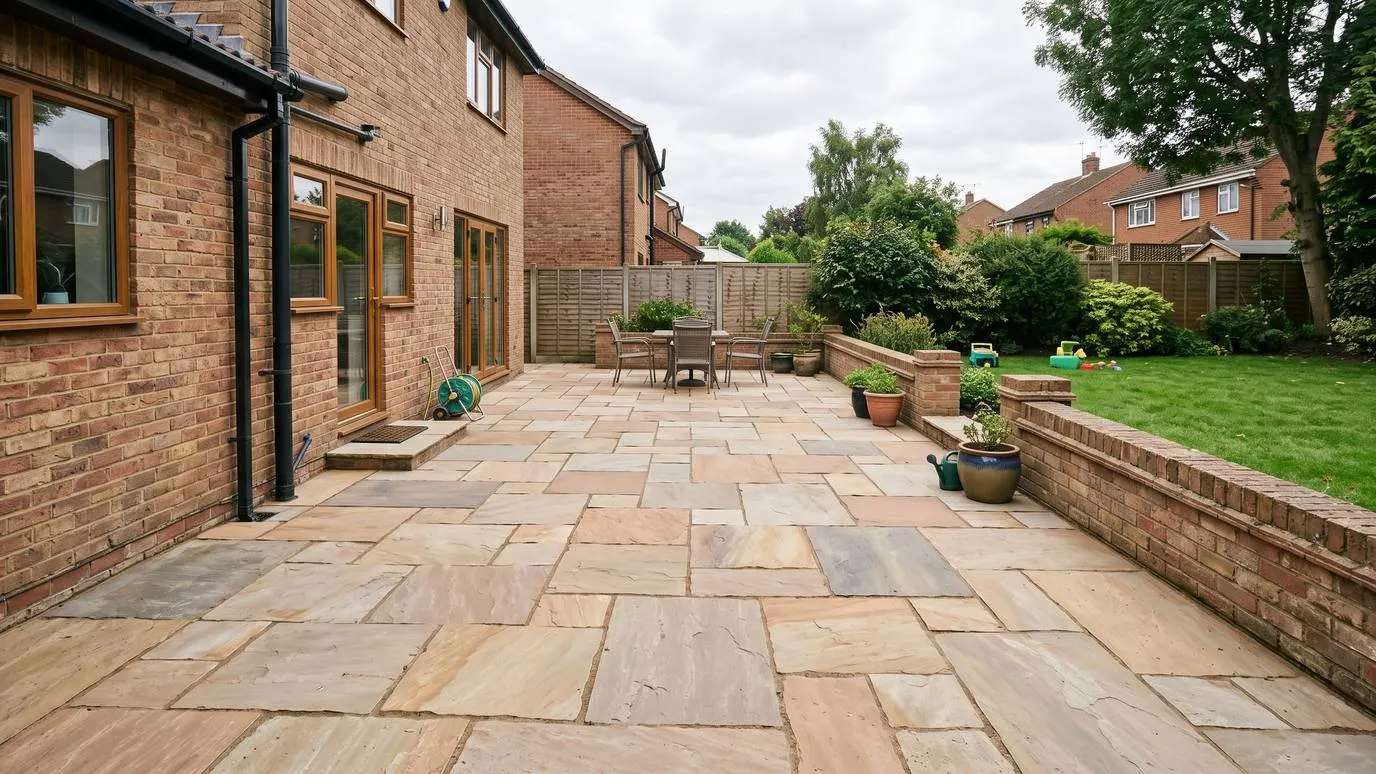
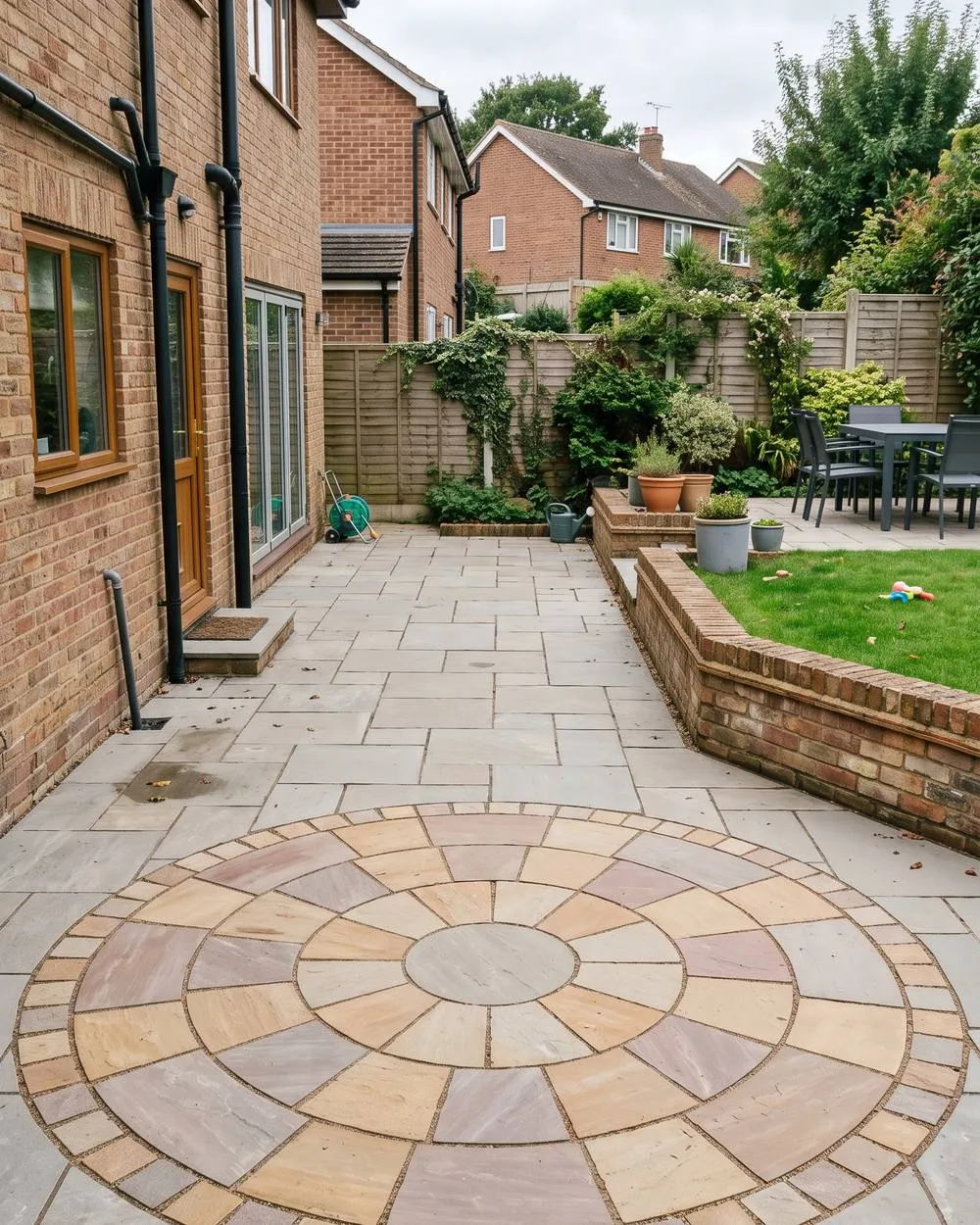
Patios in stone or porcelain, bedded on mortar over a compacted sub-base. Levels sit below the damp-proof course and fall away from the house.
What it covers
- Taking up and removing an old patio
- Digging out and a compacted stone sub-base
- Indian sandstone or outdoor porcelain
- Slabs on a full bed of mortar
- Priming slurry on the back of each slab
- Levels set below the damp-proof course
- Jointing suited to the stone
The detail
When a patio moves, the cause is usually under the slabs. The stone may have been too thin or badly compacted, or the slabs may be sitting on a few spots of mortar with hollows between them. So the work starts with the ground and the levels, and the slabs come near the end.
Levels against the house
The usual guidance is to keep finished paving at least 150 millimetres below the damp-proof course, so rain doesn’t splash above it. Air bricks must stay clear. The patio then falls gently away from the wall, enough for water to run off without you noticing the slope when you walk on it.
Sandstone
Indian sandstone comes riven, with a textured surface, or sawn, with a smooth top and crisp edges. Colours vary between slabs and between batches, so what arrives won’t match a showroom sample exactly. Each slab goes on a full mortar bed. A priming slurry on the back improves the bond, and care is needed with wet mortar, which can mark the surface.
Porcelain
Outdoor porcelain is commonly around 20 millimetres thick and absorbs very little water, which makes it easy to clean and hard for mortar to grip. A bonding primer on the back of each slab deals with that. It’s strong but brittle, so hollow spots underneath can lead to a crack under a table leg. Cutting takes time and needs the right diamond blade, so a written quote should allow for the cuts around drains and steps.
Step by step
- 01
Mark it out
We mark the size and shape, find the damp-proof course and any air bricks, and agree where the rain will run.
- 02
Dig and compact
The old slabs and soil come out, then crushed stone goes down in layers and is compacted to the falls.
- 03
Lay on a full bed
Each slab is primed on the back and bedded on mortar across its whole underside, with cuts made around drains and edges.
- 04
Joint and clean
Joints are filled once the weather suits, the surface is cleaned off, and you get a look round before we call it done.
Before and after
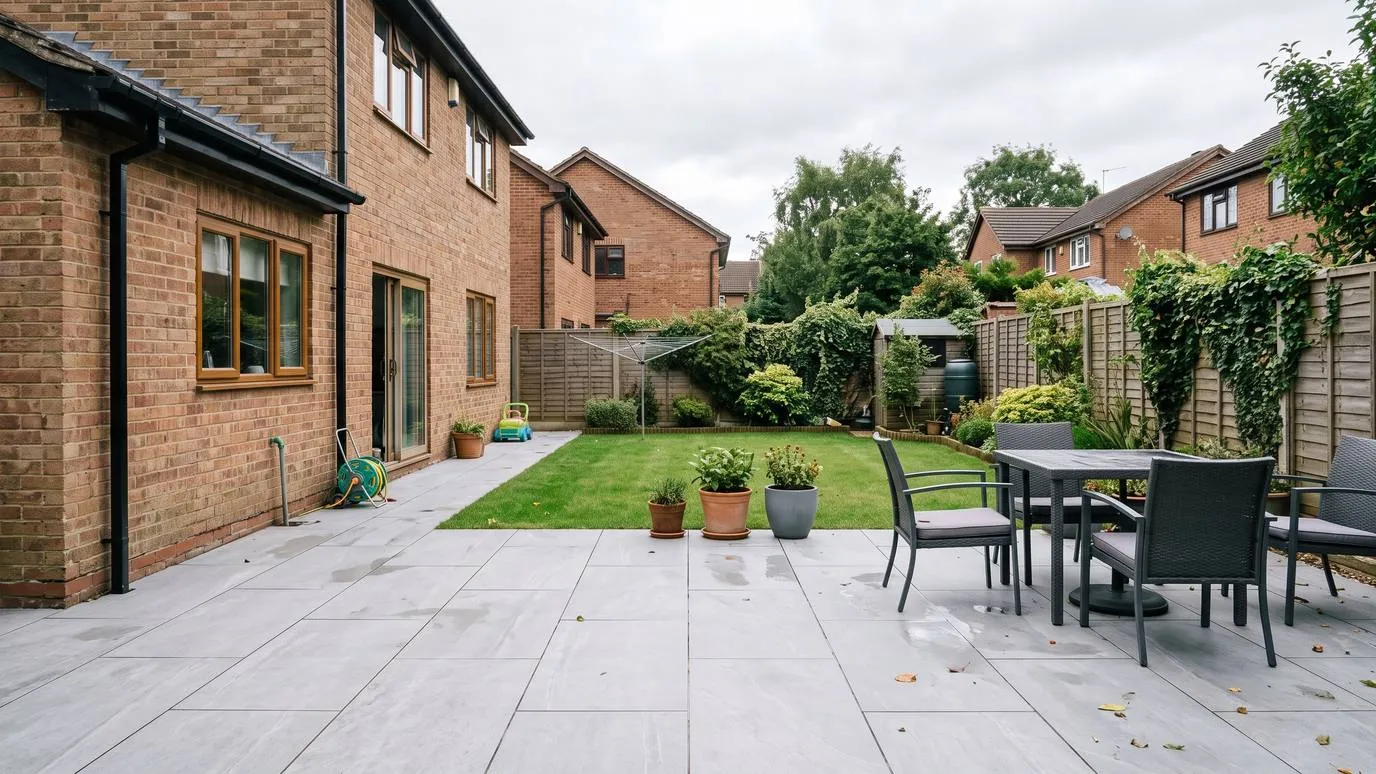
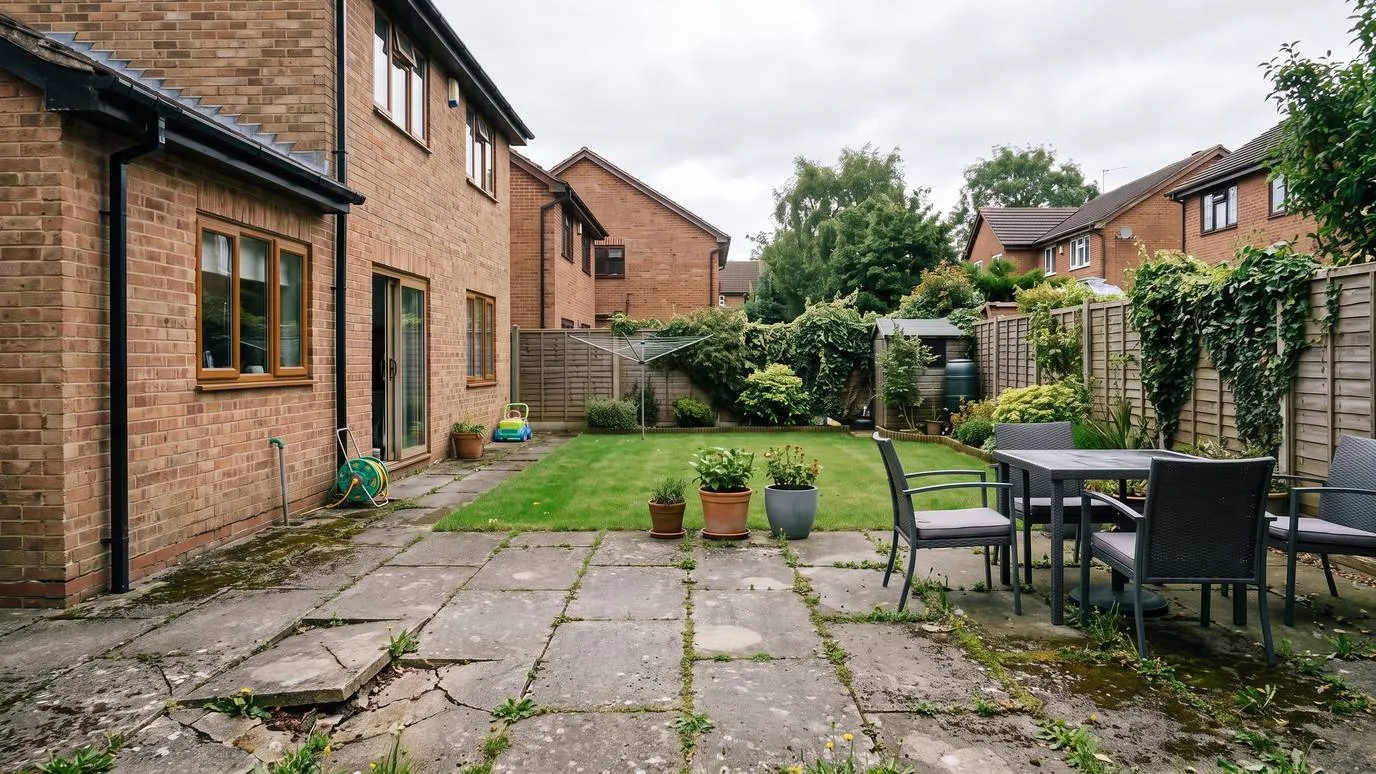
Back patio: mossy slabs to grey porcelain.
Photos
Questions
Sandstone or porcelain?
Sandstone has natural variation from slab to slab, and it's porous, so it needs cleaning once or twice a year. Porcelain has an even colour, resists stains and doesn't need sealing, though it's worth asking about the slip rating. Seeing laid examples helps more than loose samples.
Why do old patios sink and rock?
Usually because of a thin or missing sub-base, poor compaction, or slabs set on a few blobs of mortar. Water sitting underneath makes it worse. Re-pointing won't fix a moving slab: it needs lifting and rebedding.
Can I have a level step out of my doors?
It can be done, but it conflicts with the usual guidance on keeping paving below the damp-proof course. It generally needs a drainage channel at the door and a door frame designed for level access. Your door supplier needs to be part of that conversation, and building control can advise if you're unsure.
Does a back patio need planning permission?
Back gardens are treated differently from front gardens, and the answer can depend on your property and how high the patio sits. Check with your council before work starts if you're unsure.
Other services